What If ...

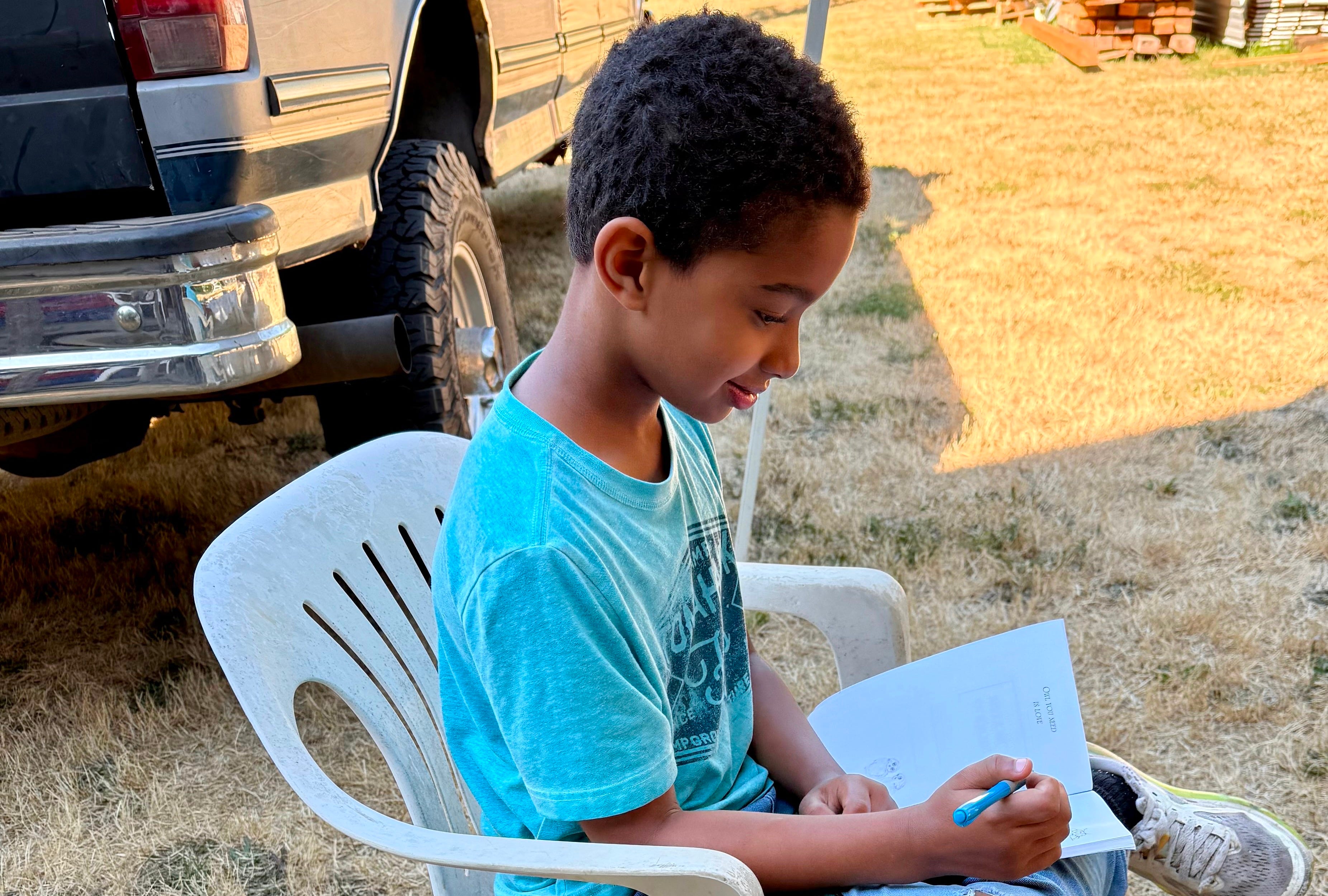
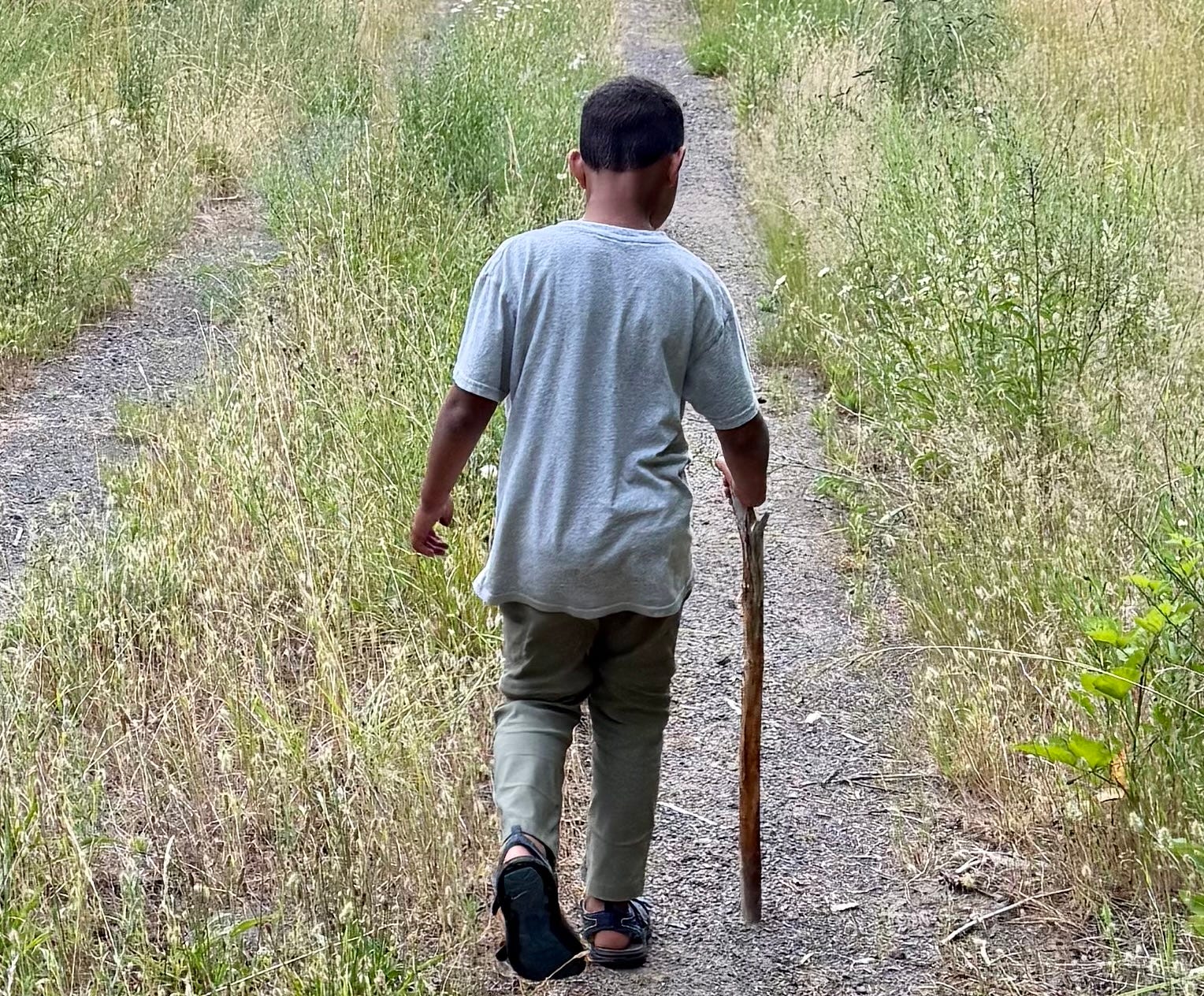
On an unseasonably cool day in late June my eight-year-old grandson Chris and I fire up Dad’s old diesel Ford pickup and rattle over the back way to the Johnny Gunter place in the Oregon Coast Range. After spending much of May working through edits on the salamander book, the chores have piled up. Grass and weeds have been busy growing and making more of themselves, and while I know they are plants and don’t care about my life circumstances, in the spring they seem downright jubilant at having been being ignored.
Chris’s first order of business is to open the chain link gate across the garage and take out the riding lawn mower. He knows how to activate the choke, turn it over, and rattle it to life. Although he’s tall for his age, it’s a long reach to get his left foot onto the go peddle. Sometimes this makes his butt come off the seat, which activates a kill switch that causes the motor to stall. All this is to say that he isn’t yet blade approved. My priority is the cordless weed whacker. The battery lasts about 45 minutes. This used to irritate me, but I’m now happy to put the thing down and find something else to do while the battery charges.
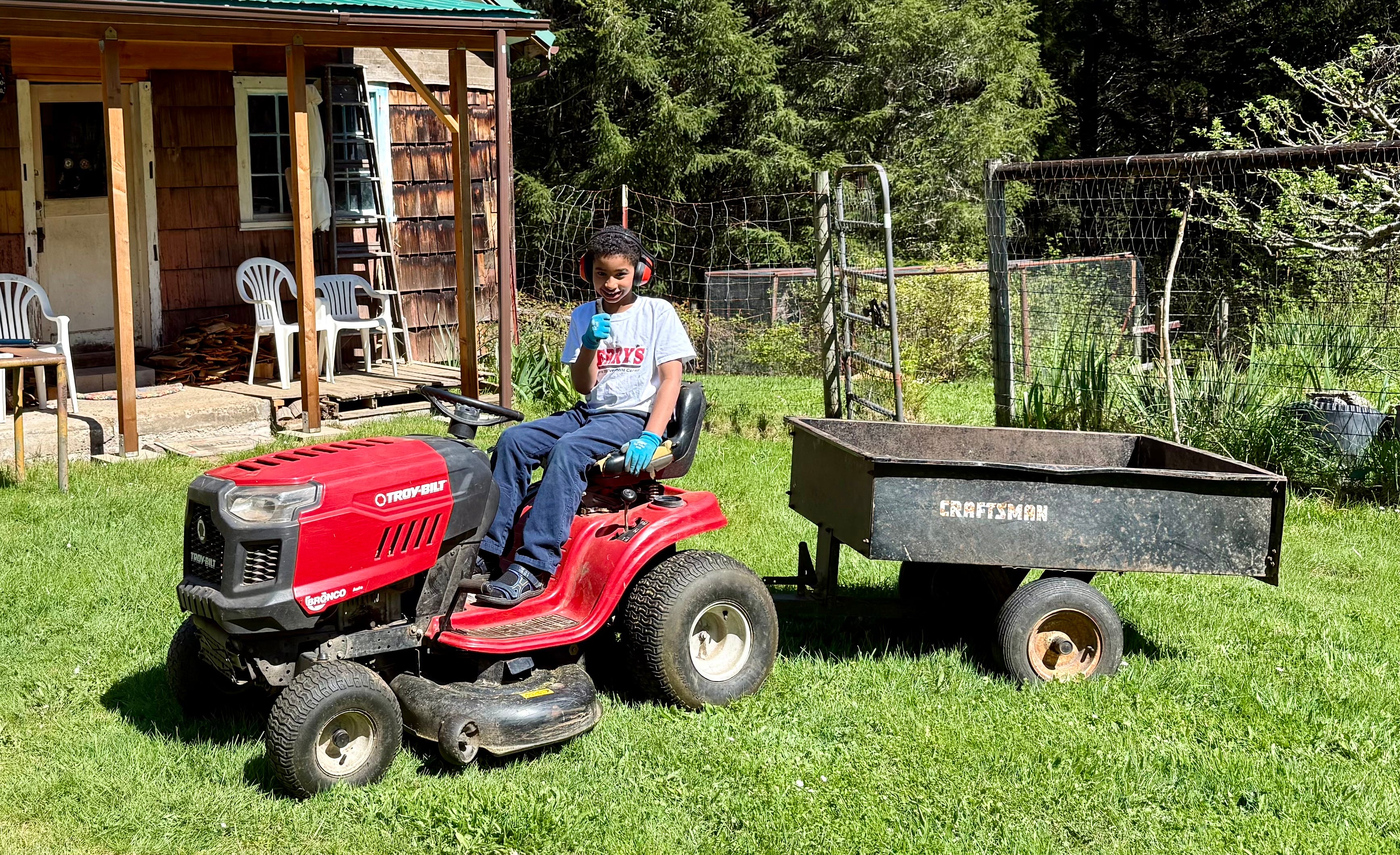
Chris has told me he wants to live here when he grows up. This makes my insides turn all warm and fuzzy. I try to remember that I’m talking with an eight-year-old who has years ahead of him in a world that often bends life away from the simple wishes of childhood. I become the voice of reason. Tell him there is grass to mow. Wood to cut. Garden to dig. A house that always needs fixing. That this place is a lot of work. In a tone that seals the matter off from further discussion, he says I like to work.
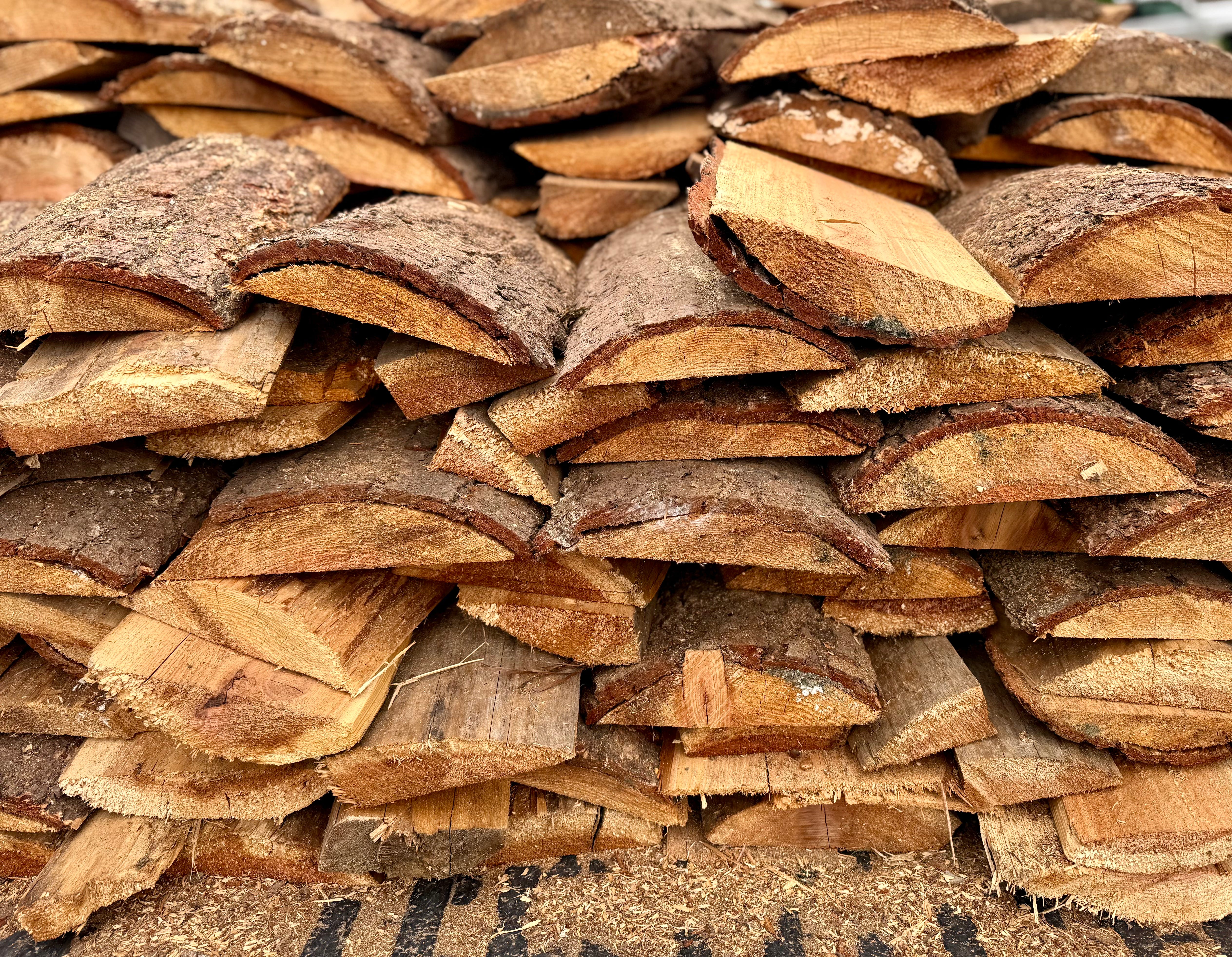
I want a nap after lunch, but my helper doesn’t take naps. So I back the pickup next to a pile of wood. The pieces are oddly shaped for firewood, all perfectly flat on one side. Milling flat lumber from a round log requires sawing slabs off each side. Out of respect for the trees they once were, I buck the slabs into woodstove lengths to heat the house this coming winter. While I throw pieces into the pickup bed, Chris stacks them into neat ricks. I know he’s in the groove when he starts singing a short tune with no words, repeating it like a mantra. The afternoon gusts along. A cool wind picks up, driving tumultuous gray clouds in from the southwest. He says the wind sounds like a river. How many times have I thought and written that? A light rain swirls, mixing his bird-like song with the river of wind that flows across the meadow and into the heavy boughs of the old forest. The pickup seems to fill itself.
We break for dinner, a pepperoni and sausage pizza out of the freezer. While Chris devours two-thirds of the pizza, I focus on his face. His eyes are nearly black. But there is more. Like obsidian, they shine in any hint of light. When I look more deeply, they become a transparent medium of refraction, the way sunlight penetrates volcanic glass and shatters into golds and greens and blues. Except that the shifting states of his eyes aren’t colors. They are memory and empathy traveling outward from his brain to glitter at the surface of those deep pools.
At age eight he has other memories. These carry the trauma from early separations but are too deep for conscious recognition. How can I wish that those things had never happened, all the while knowing that if they hadn’t come to pass, he wouldn’t be with us? That his life with our family is a blessing to him and to us that has come at the expense of unconscious scars? Maybe those seared moments are the fuel that drives his empathy, the way he fetches a glass of water for his brother when he’s in a moment of crisis.
When I’m here on my own, walking up to check on the spring is easy to postpone until next time. But Chris loves the hike up the hill and knows the drill for making sure our homespun water system is working. He struggles a bit through the spiny canes of salmonberry that prickle in front of the springhouse. Water plunges as it should from the overflow pipe, the lifeblood that keeps the old place down the hill alive with six-inch corn, cabbages just starting to fold into heads, winter squash plants beginning to tendril, and tomato plants that might make fruit by late summer. It also provides the luxury of sinks and a flush toilet.
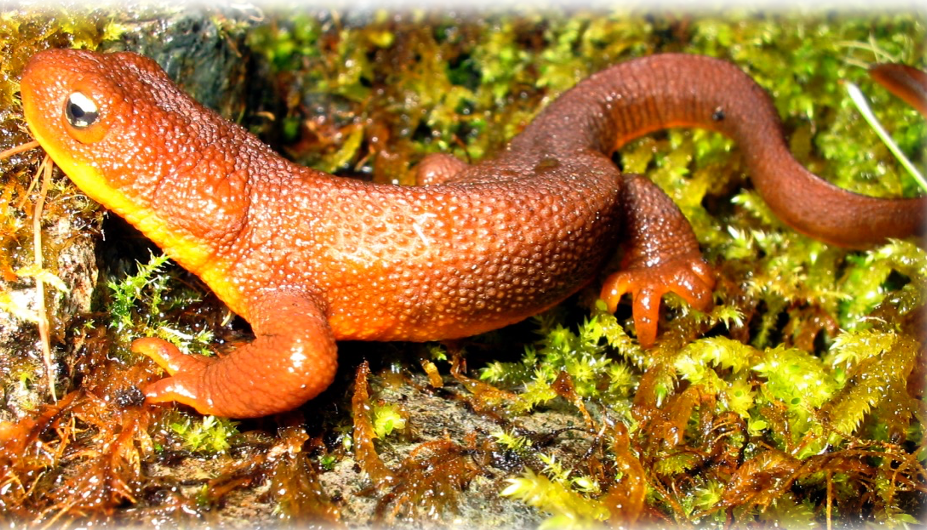
Above the springhouse water gathers into a pipe at a glassy intake pool. We approach slowly in case a Coastal Giant Salamander larva might be resting on the silty bottom. Instead, we are treated to a Rough-skinned Newt, her pebbled back gleaming like tarnished brass against moss at the pool’s edge. She spots us and takes a few sprawling steps, then stops with the knowledge deeply held that she is laden with a dare-you-to-eat-me neurotoxin, easily enough to kill both of us
Thirty feet above the intake, water burbles from the sandstone soul of the mountains into a small daylit pool, the place where I always drink from a cup of white porcelain. I tell Chris about the Southern Torrent Salamander who one day rested in the upturned cup with water spilling in, their olive back sprinkled with a shake of salt and pepper spots, eyes upturned and dark as small planets. He looks away into the forest, pupils dilating, letting his own dark eyes adjust to the story, and conjures the picture in his imagination.
My grandson has taught me a lot about othering. What leaves me always agape is that I have more in common with him than I do with most members of my family. We overlap genetically like all humans do, with genomes that are about 99% similar to one another. And within that narrow bit of genetic wiggle room, we are different. His ancestors are Jamaican/Puerto Rican, whereas mine are white European. Yet to me our differences have come to feel small.
His adoption hearing came a week after George Floyd was murdered by police on a Minneapolis street, and riots broke out in our small city. One month later, at the peak of Covid-19, I flew to New Jersey to help my son and his family that now included Chris return to Oregon. What I’ve learned since then is that many of us who reject all tenets of racism still retain a deeply ingrained sense of other. This includes me. I’ve learned that this othering can be an outcome of scarcity thinking, not only in a materialistic sense, but also in the complex ebb and flow of our emotions. In the faux egalitarian society in which we live, inherent classism leaves many feeling like have-nots. This can become a low-grade version of victimhood that leads people in search of others to blame for their misfortune. Sometimes this emotional neediness is filled by finding reasons to feel superior. Even in my predominantly progressive city, folks still love to talk smack about our sister city across the river. This pisses me off for a host of reasons, including that I grew up there.
Our othering is deeply rooted in millions of years of tribal history when survival might have been predicated on discerning member from nonmember. Is it any wonder we are so easily manipulated by marketers of all stripes selling everything from deodorant to dictators? Yet over the millennia tribes have intermarried, cooperated, and melded. Modern psychological research shows that tolerance can be learned. We know that familiarity can override othering.
Chris sometimes likes to play the “what-if game.” What if … and his proposition is often so absurd that he’s laughing as he poses it. My proposition might sound absurd, too, but I’m not laughing. What if humanity could move beyond just familiarity and tolerance? What if we could love ourselves and others in ways that severed the need for blame, for classism? What if universal love was given a little soil in which to grow? I’m not a Pollyanna—the uncertainty of my grandson’s future in a dominant white culture leaves plenty of room for worry and fear.
For now, though, he and I have this intergenerational place tucked in a conifer canyon cut by a small meandering river, a place where work is just a reason to be. Where I am in love with my grandson who has tightly curled hair that captures hemlock needles, and a café-au-lait face with a smile flashing wide and white as a trout’s belly. And those eyes. Those deep, dark, glittering pools where everyone might gather to drink.
What if?
[Many of you now know that Tsunami Books, our iconic books, art, and music space on South Willamette, is raising funds to buy their building. To help with that effort I’m joining with friends Don Latarski and poet Charles Goodrich for an evening of music and spoken word on Saturday, July 18 at 7:30 p.m. (doors open at 7). This event is FREE, but you need to preorder tickets here. When we pass the hat and any other receptacles that are available, please throw in to support the noble cause of Tsunami Books owning their space. If you can't make it, or even if you can, visit their GoFundMe site and drop in some dollars.]
This writing, this exquisite tribute of love for your 8-year-old grandson, is soil that makes imaginable the ground for universal love. For the realization of humanity. Thank you so much, Tom, for this writing.
"What if?" indeed. One of your finest pieces.